Ultimo House
"Ultimo House", from an old album page captioned "Residence of Mrs. Geo. Harris". You can see the towers, the little dome and the balcony which, according to the family, were added after a fire in the 1870s.
Ultimo House stood on a rise at Ultimo, looking down over Blackwattle Creek and Cockle Bay, for nearly 130 years. Surgeon John Harris of the New South Wales Corps had it built in 1804, on land Governor King had granted him the year before, and the whole suburb takes its name from his estate. Francis Greenway enlarged it after 1814. That was the convict architect's first private job in the colony. Over the years it hosted the officers who plotted against Governor Bligh, some of the grandest parties in early Sydney, a commercial laundry, three generations of the Harris family and, at the end, classes of the Sydney Technical College. It came down in late 1932 or early 1933, depending on which source you read, to make way for an electrical engineering building. When it went, people were calling it the oldest house in Sydney.
There is nothing left of it today. The site is somewhere inside the TAFE campus at Ultimo, between Harris, Mary Ann, Jones and Thomas Streets. I've put together the story of the house and the family below, using the Dictionary of Sydney, the Australian Dictionary of Biography and a lovely 1932 Sydney Morning Herald piece written just before the wreckers moved in. Where the sources don't agree, I've said so.
The drawing room at Ultimo House, from the same album, also captioned "Residence of Mrs. Geo. Harris".
The Land Before the House
Before any of this, the peninsula was Aboriginal country. The Dictionary of Sydney says the people around Go-mo-ra (Darling Harbour) and the top of Blackwattle Creek may have been a clan of their own, tentatively called the Gommerigal, though that name isn't officially recognised and they're usually counted among the Gadigal of the Eora. Aboriginal people were still coming and going on the estate long after Harris arrived. The Ultimo end of the sandstone ridge had good soil, with Cockle Bay on one side, Blackwattle Creek and its swamp on the other, and the Parramatta road along the bottom.

Surgeon John Harris (1754–1838), the man who built Ultimo House and gave Ultimo its name. This 1912 copy was made from a miniature. Herbert Beecroft after a miniature, State Library of New South Wales, public domain, via Wikimedia Commons
John Harris was born in 1754 at Moneymore in County Londonderry, Ireland. The Australian Dictionary of Biography says he trained in medicine at Edinburgh and spent ten years as a navy surgeon in Indian waters before joining the New South Wales Corps as surgeon's mate in 1789. He reached Port Jackson in the Second Fleet ship Surprize in June 1790 and was stationed at Parramatta, where in 1793 he took a 100-acre grant and bought James Ruse's Experiment Farm.
Governor Philip Gidley King made him a magistrate, head of the police and, in 1801, Naval Officer, the man in charge of the port and its duties. King described him as having "the most respectable character as a gentleman, joined to an unwearied activity and intelligence".
His fellow officers were less keen, especially as he backed King's crackdown on the rum trade. In October 1802 he was court-martialled for "ungentlemanlike conduct", and six months later he faced a second court martial for supposedly letting slip how two officers had voted on an earlier case. He was acquitted both times.

Governor Philip Gidley King, about 1798. King gave Harris the first Ultimo grant in December 1803 and, according to the 1932 Herald, had the house built for him with government labour. Unknown artist, oil painting, State Library of New South Wales (ML 546), public domain, via Wikimedia Commons
Why "Ultimo"?
This is the bit everyone remembers. "Ultimo" is the old Latin term clerks used in letters and legal papers to mean "of last month", while "instant" meant "of this month". The story goes that the charge papers against Harris got the date of his supposed offence wrong, writing "ultimo" when they should have written "instant", and he got off on that technicality. Harris was so pleased that he named his new grant after the slip.
The details change with the teller. The Dictionary of Sydney says he was "acquitted in a court case on a technicality"; the Pyrmont History Group says he named the estate "to relish the technicality on which he escaped conviction in a court martial"; Wikipedia and a 2005 Herald piece say the slip stopped the case going ahead. The Australian Dictionary of Biography records his two acquittals but doesn't mention the ultimo slip at all, so I'd treat the details as a good old Sydney story rather than proven fact.
Building the House – 1803 to 1804
Governor King granted Harris 34 acres in December 1803. The Dictionary of Sydney describes the grant as lying "between the church land" (the Glebe) and the brickfield at the head of Cockle Bay. More grants followed up to 1806, and with purchases Harris owned about 233 acres by 1818, taking in Ultimo, most of Pyrmont apart from John Macarthur's northern tip, and part of the Haymarket.
The house went up in 1804 on the ridge, where it would get the water views. It was a two-storey brick house, and convicts built it. In 1932 T. S. Champion dug out the official records for the Herald. A statement of "public labour done from July, 1803, to June 30, 1804" lists, under "Buildings":
"Building a brick dwelling-house for Mr. Harris in remuneration for his public services"
Six months later, Champion found, Surgeon Harris was supplied from the Government stores with "100 sheets of crown glass and 15,500 nails, for which he paid £22/15/". In other words, the house was a reward. (The City of Sydney's history walk dates it "c1805".)
A Country Seat with Indian Deer
Harris didn't want a working farm. He wanted a gentleman's country seat. He cleared and shaped the bush into English-style parkland and stocked it with deer brought in from India. Champion painted the scene for 1932 readers:
"It was a fine homestead (then considered a mansion), set in parklike lands, hedged in by a dense forest of goodly trees, with cattle, sheep, and horses browsing in the meadows, and, what the owner prized most, a herd of spotted deer from India."
The carriage drive started on George Street where Ultimo Road now meets it, and Harris Street was "but a track". The estate ran right across the peninsula from Darling Harbour to Blackwattle Bay.
It wasn't easy to keep up. The Dictionary of Sydney says the poultry, sheep and especially the deer were "an irresistible temptation" to the convicts and soldiers camped around the nearby brickworks.
The Dinner Before the Rum Rebellion – January 1808
Under Governor Bligh, Harris's luck turned. In May 1807 Bligh sacked him as Naval Officer and magistrate, and Harris became one of his bitterest critics, painting him, in the ADB's words, as "avaricious, dishonest and tyrannical". In January 1808 he hosted a dinner at Ultimo House for officers who were against the governor. According to the Dictionary of Sydney and the Pyrmont History Group, the plotters went straight from that dinner into Sydney to call out the troops and arrest Bligh on 26 January 1808, the Rum Rebellion. Major George Johnston made Harris a magistrate again the next day, 27 January, but Harris soon fell out with John Macarthur and was sacked again on 5 April 1808.

"The arrest of Governor Bligh", a mocking watercolour from 1808. The plotters came to town from dinner at Ultimo House. Unknown artist, 1808, State Library of New South Wales (Safe 4/5), public domain, via Wikimedia Commons
Ordered to London to put the rebels' case, Harris pleaded sickness, but he finally sailed in 1809 (about April per the ADB, March per the 1932 Herald) and gave evidence at Johnston's court martial in 1811.
Harris Comes Home and Greenway Gets to Work – 1814
Harris resigned his commission and came back to Sydney as a private settler on the General Hewitt, with his new wife Eliza. The ADB gives the arrival date as 7 February 1814, while Champion's 1932 article says April 1814. On the same ship was a convict named Francis Greenway, transported for forgery.
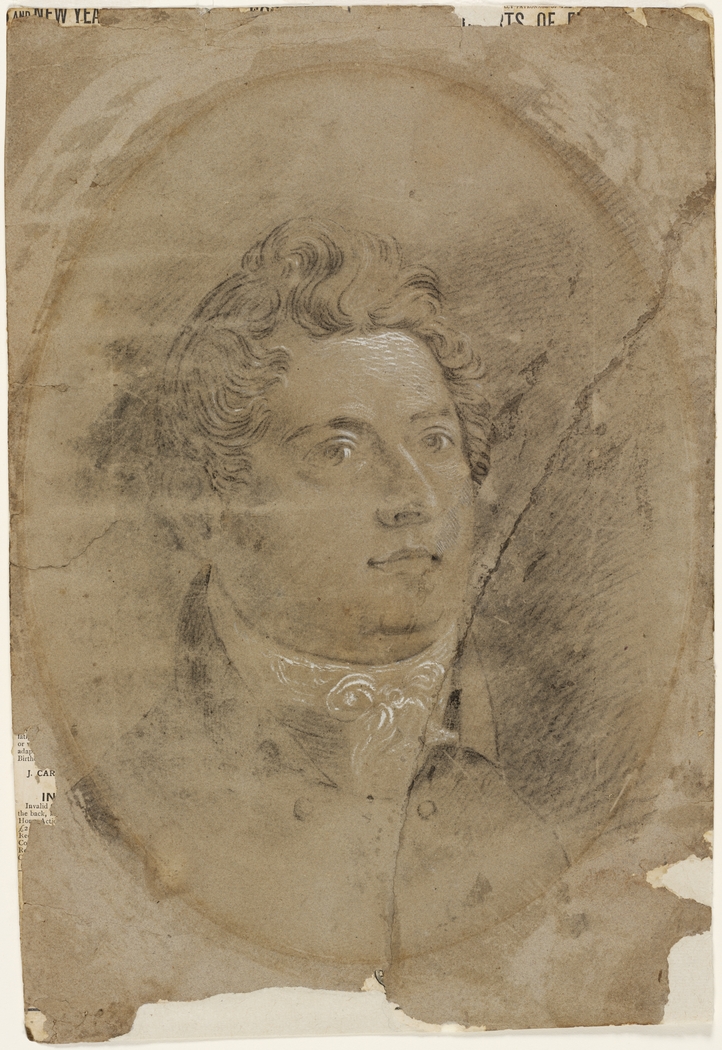
Francis Greenway, the convict architect. He came out on the same ship as Harris in 1814. Unknown artist, pencil, between 1814 and 1837, State Library of New South Wales (ML 482), public domain, via Wikimedia Commons
Soon after getting home, Harris hired Greenway to extend Ultimo House. The Dictionary of Sydney, citing Broadbent and Hughes's book on Greenway, says it was Greenway's first private commission in the colony. His great Macquarie buildings came later. The City of Sydney's history walk says Greenway "remodelled" the house in the 1810s. I haven't found a source that says exactly what he added, so I'll leave it at that.
There was some bad news waiting for Harris, too. According to Champion, his "much-prized herd of about 400 deer had been dispersed during his absence". Still, the Harrises entertained a great deal and Ultimo House became "one of the best-known places of Sydney". They never had children. Around 1820 a nephew, also called John Harris (later John Harris of Shane's Park), arrived in Sydney.
Harris was one of the first directors of the Bank of New South Wales in 1817 and went as surgeon on Oxley's 1819 expedition to Bathurst.
The Colony's Best Address – the Tenants
Harris moved out in 1821, and again the sources give different reasons. Champion says he decided the house was too big for just the two of them and moved to Crown Cottage nearby, and later to his 890-acre estate at Shane's Park. The Dictionary of Sydney points to industry creeping in across Parramatta Street, with abattoirs along the Blackwattle Swamp. The Pyrmont History Group blames the smell from a nearby brewery and distillery.
His tenants kept it, in the Dictionary of Sydney's words, "one of the colony's premier addresses":
Edward Riley, the merchant, from 1821 to 1824. Ultimo House became one of the town's great party houses. At one party, held to farewell HMS Tees and her crew and reported in the Sydney Gazette on 19 August 1824, 240 people dined in three sittings while Captain Piper's band played dances until morning.
Judge John Stephen, the first solicitor-general, later a judge.
John Edye Manning, registrar of the Supreme Court of New South Wales.
John Harris died on 27 April 1838. The ADB says he left property "said to be worth £150,000". He left everything to his brothers' families (Champion), and the heirs wrangled for years. The Dictionary of Sydney's Ultimo entry jokes that "litigation seems to have been in the Harris family blood".

Experiment Farm Cottage at Harris Park, on the Parramatta land Harris bought from James Ruse. Its building date is still argued over. Photo by Sardaka, 2013, CC BY 3.0, via Wikimedia Commons
A Laundry, a Wool Broker and the Harrises Again – 1850s to 1890s
In the 1850s Ultimo House had an unlikely spell as a laundry. The Australian Washing Association advertised in the Sydney Morning Herald (3 May 1853) that the place had hot and cold water laid on, with washing taken in from Monday to Wednesday and sent back from Thursday to Saturday.
By 1855 it was a home again, leased to the wool broker James Wallach. By 1858 the Harris family had moved back in, first Mary Ann Harris and then George Harris, who lived there until he died in 1897. The Dictionary of Sydney calls George the surgeon's nephew in one entry and counts him among the third generation in another, so I'll leave the family tree alone. His relatives built houses nearby too, among them Bulwara in Jones Street and Warrane on Crown Road (now Bulwara Road), and Matthew Harris became Mayor of Sydney in 1898.
Meanwhile the estate was being whittled away. Frontages on George Street went in 1830 and 1832 (at about 30 shillings a foot, says Champion) and the Sydney Railway Company took seven acres in 1853. The big subdivision had to wait until the family squabbles were partly settled in 1859 (some accounts say the 1860s). After that the Harrises built rows of terraces and pubs, quarries opened along the western side of the peninsula, and by the late 1890s the old house was left with only about three acres.

Looking west over Darling Harbour and the old Pyrmont Bridge from the Sydney Town Hall tower in the 1870s. The peninsula beyond was nearly all Harris land once. Unknown photographer, 1870s, public domain, via Wikimedia Commons
The Fire and the Towers
Sometime in the 1870s the house caught fire. Champion quotes Mr George Harris, "the oldest representative of the younger generation of the family", who remembered:
"coming home from the Rev. Dr. Fullerton's Church in Pitt-street one Sunday morning and seeing the shingled roof of the house all ablaze."
After the fire, he said, his uncle George, who owned the house then, "made various additions and alterations, including the central wooden staircase, the dome, and the balcony". The Dictionary of Sydney says George Harris added three turreted towers to the front, probably after the fire. You can see them in the album photograph at the top. Around then, Champion says, a dividing wall went up between George's half with the house and the rest, owned by John Harris of Shane's Park.
The Technical College Moves In

The Sydney Technical College on the corner of Harris and Mary Ann Streets in 1899, built on land bought from the Harris family. Ultimo House was still standing on the same block. Star Photo Co., 1899, State Library of New South Wales (PXE 711 / 252), public domain, via Wikimedia Commons
The house's last chapter began in 1883, when the new Board of Technical Education held its first public meeting and someone suggested buying 3.5 acres of the Harris estate for a new Sydney Technical College. The Minister, Joseph Carruthers, thought students wouldn't travel to such a remote spot. So the engineer Norman Selfe and the architect James Barnet took him up to the top of Hordern's tall building at the Haymarket, where, Selfe recalled, "Ultimo House apparently lay right under foot". Once Carruthers had walked to the site, he agreed it was central after all.
The sources give different dates for the sale. Champion, who was a clerk in the Board's office at the time, says the Government bought the strip of over three acres from John Harris in 1888. He remembered Harris as "a burly old gentleman, who was somewhat deaf". The Dictionary of Sydney gives 1891 as the purchase year, and the City of Sydney's history walk gives 1890. The first classes started at Ultimo in March 1891, and the Government Architect W. E. Kemp's buildings, the College, the Technological Museum and two high schools, went up along Harris and Mary Ann Streets between 1891 and 1893.
In 1900 Mrs George (Matilda) Harris of Ultimo House gave the University of Sydney £1,700 to set up a law scholarship of £50 a year in memory of her husband. The George and Matilda Harris Scholarship is still going.
Classrooms in the Old House – 1910 to 1932

The Technical College buildings at Ultimo around 1900. In 1910 the College took over Ultimo House too. Tyrrell Photographic Collection, Powerhouse Museum, about 1900, no known copyright restrictions, via Wikimedia Commons
In 1910 the College doubled in size, taking in the whole block of Harris, Mary Ann, Jones and Thomas Streets, including Ultimo House and its two acres of garden. At first the gardens were used as a lunch and recreation area, one of the only green, shady spots in the neighbourhood. James Nangle, head of the architecture department, oversaw turning the house into classrooms for women's dressmaking, millinery and flower-making, for veterinary science and agriculture, and for general lectures. The tumbledown stables and coach house at the back were used for bricklaying, plastering, masonry, drawing and design. Sydney Technical High School also held classes in Ultimo House from 1911 to 1924. The College was so crowded that students ate their meals by candlelight down in the cellars.
"Old Landmark Passing" – the End of Ultimo House
On 29 October 1932 the Sydney Morning Herald ran T. S. Champion's article "Ultimo House. Old Landmark Passing", which opened:
"In the course of a few weeks Ultimo House, in Harris-street, which figured so prominently in pre-Macquarie and later days, is to be pulled down to make room for further class-rooms required at the Technical College."
Nangle, by then Superintendent of Technical Education, gave Champion a description of what was left inside. The house was brick, with many of its inside walls "of the old colonial wattle and daub". The front doorway had a fanlight with "some delicate sash bars in circular form", and the windows still had their old inside shutters that folded back into the window linings like panels. The best thing in the house was the original stone staircase in a semicircular hall:
"The original stair is a fine example of what is known as a geometrical stair. It is in a semi-circular hall; the treads are of stone supported at one end only in the wall, so that the stair depends largely for its stability on the arch principle."
Some of the cedar mantelpieces were still there too, "very fine examples of mantelpieces of the Georgian period".
Champion's own visit was a bit sad. He climbed up to the dome, but the view was "entirely restricted to glimpses of workshops and tall buildings". The rooms were "all dark and dreary", and he had to strike match after match to see them. "Evidently the family ghost, if one existed, was absent," he wrote, "but in one room (used formerly for Veterinary Science teaching) there still remained the skeleton of a horse's head suspended from a bracket."
He called it, "so far as I am aware", the oldest dwelling house in Australia built by Government labour, but admitted it had "long outlived its usefulness". Nangle meant to keep some mantelpieces, and Champion suggested a student make a model of the house in Oamaru stone for the Mitchell Library. I don't know whether either happened.
The Dictionary of Sydney's Ultimo House entry says the house was demolished in November 1932, and that more Herald articles mourning the old landmark followed, including one on 24 November 1932. Its Sydney Technical College entry, citing Norm Neill's 1991 history of the College, says it was "finally demolished in 1933", and the City of Sydney says it was gone "by 1933". It may simply be that the work began in late 1932 and ran into 1933, but I haven't been able to confirm that. Its replacement was a new Electrical Engineering building designed by Edward Rembert, a former student of the College.
What's There Today
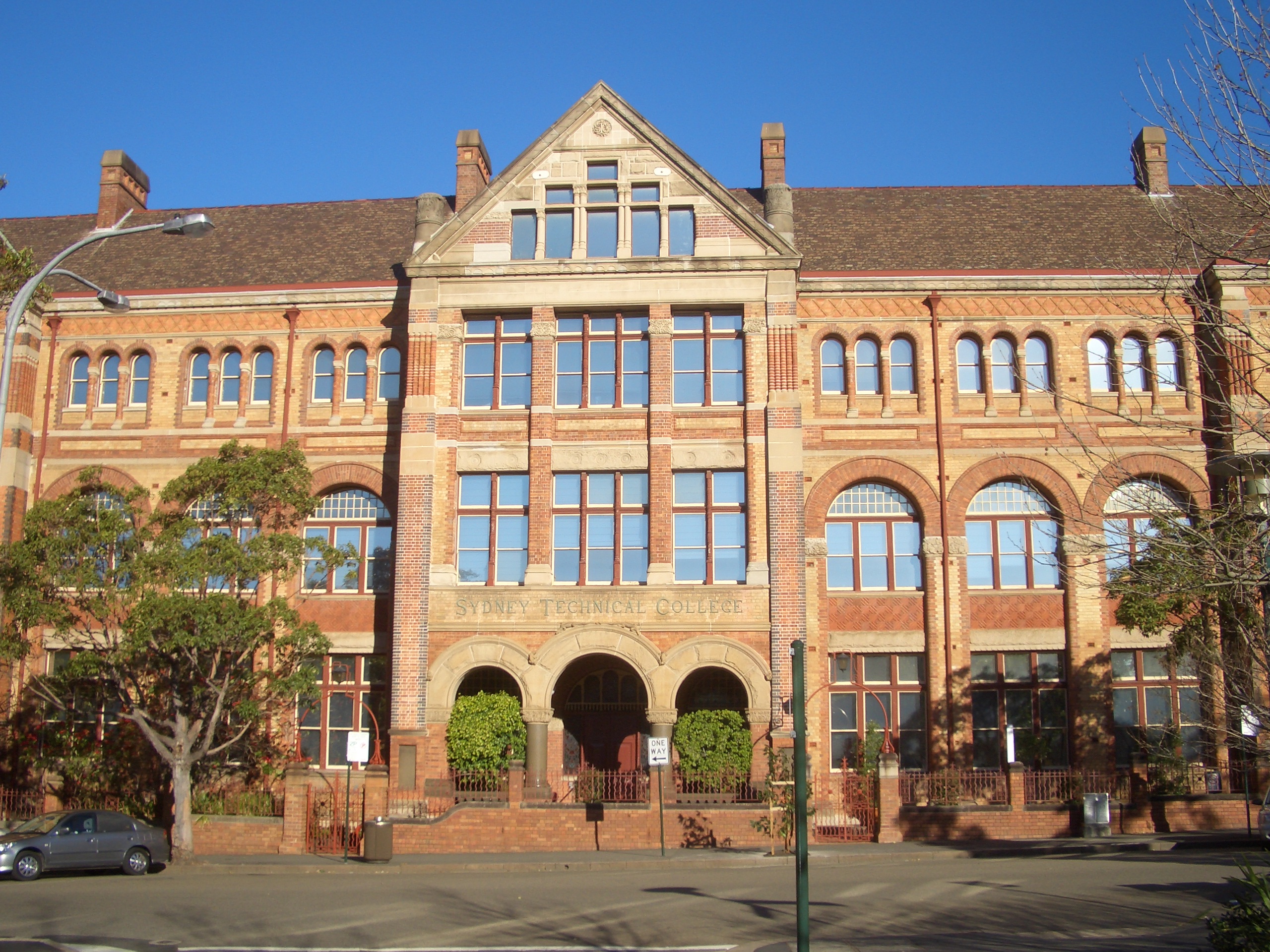
The old Technical College building as part of the TAFE campus at Ultimo in 2007. The grounds of Ultimo House lie under the campus. Photo by J Bar, 2007, CC BY 3.0, via Wikimedia Commons
The block is still a college campus. The Technical College became TAFE, and the old Kemp buildings on Mary Ann Street are still in use at TAFE NSW's Ultimo campus. The City of Sydney walk notes that as you go along Jones Street, which cuts through the campus, "you are walking in what were once the grounds of Surgeon John Harris' Ultimo House", and calls the place the "sacred site" of technical education in New South Wales. UTS and UNSW both began as parts of the College.
The Harris name is still everywhere. Harris Street runs right down the peninsula, Harris Park at Parramatta is named after the family, and the suburb carries the name of a court case Harris is said to have won more than 220 years ago. It still seems a shame to me that the house where the Rum Rebellion was hatched was knocked down for a classroom block, but it did outlast nearly every other colonial house in Sydney.
1754 – John Harris born at Moneymore, Ireland.
1790 – Arrives in the Surprize (Second Fleet), NSW Corps surgeon's mate.
1802–1803 – Two courts martial, two acquittals; the "ultimo" story belongs here.
December 1803 – Governor King grants him 34 acres.
1804 – Brick house built by government labour (c.1805 per City of Sydney).
January 1808 – Anti-Bligh dinner at Ultimo House; Bligh arrested 26 January.
1809–1814 – Harris in England; returns on the General Hewitt with his wife Eliza and convict Francis Greenway.
c.1814 – Greenway extends the house, his first private commission.
1818 – Estate reaches about 233 acres.
From 1821 – Leased to Edward Riley (1821–24), Judge John Stephen and John Edye Manning.
1838 – Harris dies on 27 April.
1850s – Briefly a laundry (Australian Washing Association); 1855 leased to James Wallach.
1858–1897 – Harris family back in residence; George Harris lives there until his death in 1897.
1859 – Estate divided; subdivision begins.
1870s – Fire; towers, dome and balcony added.
1888–1891 – Government buys Harris land for the Technical College (dates differ).
1910 – College takes over the house and gardens.
1911–1924 – Sydney Technical High School classes in the house.
29 October 1932 – Herald runs "Ultimo House. Old Landmark Passing".
November 1932 / 1933 – House demolished for the Electrical Engineering building.
Pictures Worth Looking Up
There are no free-licence pictures of Ultimo House itself on Wikimedia Commons, so these are links only:
Edward Mason, "Ultimo Place with Cockle Bay", c.1821–1823, State Library of New South Wales (a1080067 / PXC 459, image 28), shown on the Dictionary of Sydney: https://dictionaryofsydney.org/image/18880
"The Ultimo Estate and Darling Harbour about 1865", Dixson Library, State Library of New South Wales (a7446060 / DL PX 148), shown on the Dictionary of Sydney's Ultimo entry: https://dictionaryofsydney.org/entry/ultimo
The Dictionary of Sydney's Ultimo House entry and its picture gallery: https://dictionaryofsydney.org/entry/ultimo_house
My Earlier Posts
The Lord Wolseley Hotel – 1881 – Ultimo – Pyrmont – Sydney – NSW
Arrest of Governor Bligh – The Rum Rebellion – 26 January 1808
Elizabeth Farm – Alice Street – Parramatta – NSW
Old Government House – Parramatta – New South Wales
Francis Greenway's Residence – George Street, Cnr Argyle Street – The Rocks – Sydney
St Matthew's Church, Windsor – Francis Greenway
Hyde Park Barracks – Macquarie Street
South Head – The Macquarie Lighthouse
Simeon Lord's Mansion – Macquarie Place – Sydney – NSW
Lyndhurst – 61 Darghan Street – Glebe – NSW
The Old Toll Gate – Cnr George And Pitt Sts Railway Square
Sydney Trams – From Horse Trams to Light Rail – A History of Sydney Transport
Old Sydney Demolished – The Truth – Saturday 20th April 1912 – Page 10
Disappearing Relics Of Old Sydney – Sydney Mail – Wednesday 1st September 1926 – Page 10
Reference works and histories
Shirley Fitzgerald, "Ultimo", Dictionary of Sydney, 2008. https://dictionaryofsydney.org/entry/ultimo
"Sydney Technical College", Dictionary of Sydney (citing Norm Neill, Technically & Further: Sydney Technical College 1891–1991, Hale & Iremonger, 1991). https://dictionaryofsydney.org/entry/sydney_technical_college
"Ultimo House" (building record), Dictionary of Sydney. https://dictionaryofsydney.org/building/ultimo_house
B. H. Fletcher, "Harris, John (1754–1838)", Australian Dictionary of Biography, vol. 1, 1966. https://adb.anu.edu.au/biography/harris-john-2164
City of Sydney, Renewal: Ultimo History Walk (2024 edition). https://www.cityofsydney.nsw.gov.au/-/media/corporate/files/publications/history/history-walks/renewal-ultimo-history-walk-accessible-20240821.pdf
Shirley Fitzgerald and Hilary Golder, Pyrmont & Ultimo: Under Siege, Hale & Iremonger, 1994 (2nd ed. Halstead Press, 2009), as cited by the Dictionary of Sydney.
J. Broadbent and J. Hughes, Francis Greenway: Architect, Historic Houses Trust, 1997, p. 83, as cited by the Dictionary of Sydney.
Wikipedia, "John Harris (Australian settler)". https://en.wikipedia.org/wiki/John_Harris_(Australian_settler)
Wikipedia, "Ultimo, New South Wales". https://en.wikipedia.org/wiki/Ultimo,_New_South_Wales
Wikipedia, "Francis Greenway". https://en.wikipedia.org/wiki/Francis_Greenway
"From heaven to hell in one easy walk", Sydney Morning Herald, 7 March 2005. https://www.smh.com.au/national/from-heaven-to-hell-in-one-easy-walk-20050307-gdkvfa.html
Newspapers (Trove)
T. S. Champion, "Ultimo House. Old Landmark Passing", Sydney Morning Herald, 29 October 1932, p. 9. http://nla.gov.au/nla.news-article16926435
Sydney Gazette and New South Wales Advertiser, 19 August 1824, p. 4 (party for HMS Tees), as cited by the Dictionary of Sydney.
Sydney Morning Herald, 3 May 1853, p. 1 (Australian Washing Association advertisement), as cited by the Dictionary of Sydney.
Sydney Morning Herald, 21 March 1911, p. 4 (Ultimo House converted to classrooms), as cited by the Dictionary of Sydney.
Sydney Morning Herald, 24 November 1932 (Ultimo House demolition), as cited by the Dictionary of Sydney.
Pictures
Apart from the two album photographs of Ultimo House at the top, all pictures are from Wikimedia Commons, with the original holders, licences and links given under each picture.
Sources & further reading
- Mark Dunn — “Ultimo House,” Dictionary of Sydney (2010): https://dictionaryofsydney.org/entry/ultimo_house
- Shirley Fitzgerald & Hilary Golder — Pyrmont & Ultimo: under siege
- J. Broadbent & J. Hughes — Francis Greenway: Architect (Historic Houses Trust)
- Sydney Morning Herald — 29 Oct 1932; 24 Nov 1932 (demolition)
- Pyrmont History Group — Surgeon John Harris: https://pyrmonthistory.net.au/harris-surgeon-john
Related on this blog
Built 1804 · Extended 1814 (Francis Greenway) · Demolished November 1932 (Sydney Technical College expansion)
On a rise above Blackwattle Creek and Cockle Bay — close to the old Parramatta road — surgeon John Harris built a two-storey country seat in 1804 and named his estate Ultimo. For a generation it was one of the colony’s premier addresses; Francis Greenway’s 1814 enlargement was his first private commission. The house was demolished in November 1932 for Technical College expansion, then claimed to be Sydney’s oldest standing residence.
At a glance
- Location: Ultimo estate / Harris Street precinct (later Technical College / UTS–TAFE campus block of Harris, Mary Ann, Jones and Thomas streets)
- Built: 1804 for Surgeon John Harris (convict labour; Governor King grant context)
- Architect (extension): Francis Greenway, 1814 — first private commission
- Estate: from 34-acre (13.8 ha) King grant (Dec 1803) grown to ~233 acres (94.3 ha) by 1818 across Ultimo/Pyrmont peninsula
- Later uses: leased as prestige residence; brief mid-1850s laundry (Australian Washing Association); Harris family again; from 1910 Technical College classrooms; demolished Nov 1932
- Fate: Demolished — site absorbed into Technical College / later educational campus
Site & setting
Harris’s house stood on a rise overlooking Blackwattle Creek and Cockle Bay, within the country of the Gommerigal people of the Eora Nation (Dictionary of Sydney Ultimo entry). Governor King granted Harris 34 acres in December 1803; further grants and purchases assembled most of the Ultimo/Pyrmont peninsula. Harris landscaped bush into English-style parkland grazed by imported Indian deer — a country seat more for show than production. Industry and subdivision later remade Ultimo. By the late 1890s the house sat on roughly three acres; from 1891 the Board of Technical Education took Harris land for college, museum and schools; in 1910 the college swallowed the house block itself.
Timeline
- December 1803 – Governor King grants Harris 34 acres; house built 1804.
- 1803–1806 – Further grants swell Ultimo holdings; by 1818 ~233 acres.
- January 1808 – Dinner at Ultimo House among officers opposed to Governor Bligh; conspirators leave to arrest Bligh (Rum Rebellion) — Dictionary of Sydney narrative.
- 1814 – Harris returns from London (Johnston court-martial evidence) with new wife; commissions Francis Greenway to extend the house.
- 1821 onward – Harris leases out; tenants include Edward Riley (1821–24), Judge John Stephen, John Edye Manning — house remains a premier social address (e.g. large parties under Riley).
- Mid-1850s – Brief use by Australian Washing Association laundry.
- From 1858 – Harris family again (Mary Ann Harris; then George Harris until death 1897); façade turrets added, probably after a 1870s fire (SMH / DoS).
- 1891 – Technical College site purchased on Harris estate; college buildings front Harris and Mary Ann streets.
- 1910 – College expands to whole block including Ultimo House; house and stables converted to classrooms (James Nangle supervises).
- November 1932 – House demolished for new electrical engineering building; SMH lament articles (29 Oct / 24 Nov 1932).
Architecture & interiors
Contemporary and later accounts describe a stately two-storey colonial country residence. Greenway’s 1814 work enlarged Harris’s 1804 fabric — historically important as Greenway’s first private commission in the colony (Broadbent & Hughes via DoS). George Harris’s later turreted façade alterations (post-1870s fire tradition) changed the skyline before the Technical College chapter. Classroom conversion after 1910 stripped domestic use; demolition in 1932 removed the fabric.
People & anecdotes
Surgeon John Harris (1754–1838) — NSW Corps surgeon, magistrate, Naval Officer — named the estate Ultimo (“of last month”), tradition linking the name to a court-martial technicality. ADB / Pyrmont History Group and Dictionary of Sydney agree on the grant-and-house spine. Greenway arrived on the same ship as Harris’s 1814 return (General Hewitt). The Rum Rebellion dinner of January 1808 ties the house to the colony’s most famous political coup. Later tenants kept Ultimo House in the social pages; George Harris (mayor of Sydney in secondary accounts) lived there through the estate’s subdivision decades. Mrs George Harris endowed the University of Sydney’s George and Matilda Harris Scholarship in law (1900) — an educational coda before the college literally moved into the house.
What stands today
Ultimo House does not stand. The Harris / Mary Ann / Jones / Thomas street block is educational campus (Technical College lineage → TAFE / UTS precinct). Walk Harris Street for the college museums and the street name that still carries the surgeon’s estate. Pair with other early colonial losses on this blog (e.g. Spencer Lodge, Burdekin House).
Sources & further reading
- Mark Dunn — “Ultimo House,” Dictionary of Sydney (2010): https://dictionaryofsydney.org/entry/ultimo_house
- Shirley Fitzgerald & Hilary Golder — Pyrmont & Ultimo: under siege
- J. Broadbent & J. Hughes — Francis Greenway: Architect (Historic Houses Trust)
- Sydney Morning Herald — 29 Oct 1932; 24 Nov 1932 (demolition)
- Pyrmont History Group — Surgeon John Harris: https://pyrmonthistory.net.au/harris-surgeon-john
Related on this blog
000" height="415" src="https://blogger.googleusercontent.com/img/b/R29vZ2xl/AVvXsEhr3oGADOniiHtgngH4pnf2pGCZdh_UUa-BsXoQBvF0Mx13z7gSbFTyFeHoCSnR9A7Fp-Xqdy1xG6E-ldR6ZZCOO1XweLe1WOiwtrTu-4LqB1bAQG6f2Xvrhpt7l7mm0eSHdFEAshNqn7dlP2Te8kk5B-jj1wg-iVU6PwEj_M1nhyphenhyphenX-K808pPt2_UXAeMg/w544-h415/Utimo%20House.jpg" width="544" />


"Ultimo House", from an old album page captioned "Residence of Mrs. Geo. Harris". You can see the towers, the little dome and the balcony which, according to the family, were added after a fire in the 1870s.
Ultimo House stood on a rise at Ultimo, looking down over Blackwattle Creek and Cockle Bay, for nearly 130 years. Surgeon John Harris of the New South Wales Corps had it built in 1804, on land Governor King had granted him the year before, and the whole suburb takes its name from his estate. Francis Greenway enlarged it after 1814. That was the convict architect's first private job in the colony. Over the years it hosted the officers who plotted against Governor Bligh, some of the grandest parties in early Sydney, a commercial laundry, three generations of the Harris family and, at the end, classes of the Sydney Technical College. It came down in late 1932 or early 1933, depending on which source you read, to make way for an electrical engineering building. When it went, people were calling it the oldest house in Sydney.
There is nothing left of it today. The site is somewhere inside the TAFE campus at Ultimo, between Harris, Mary Ann, Jones and Thomas Streets. I've put together the story of the house and the family below, using the Dictionary of Sydney, the Australian Dictionary of Biography and a lovely 1932 Sydney Morning Herald piece written just before the wreckers moved in. Where the sources don't agree, I've said so.
The drawing room at Ultimo House, from the same album, also captioned "Residence of Mrs. Geo. Harris".
The Land Before the House
Before any of this, the peninsula was Aboriginal country. The Dictionary of Sydney says the people around Go-mo-ra (Darling Harbour) and the top of Blackwattle Creek may have been a clan of their own, tentatively called the Gommerigal, though that name isn't officially recognised and they're usually counted among the Gadigal of the Eora. Aboriginal people were still coming and going on the estate long after Harris arrived. The Ultimo end of the sandstone ridge had good soil, with Cockle Bay on one side, Blackwattle Creek and its swamp on the other, and the Parramatta road along the bottom.

Surgeon John Harris (1754–1838), the man who built Ultimo House and gave Ultimo its name. This 1912 copy was made from a miniature. Herbert Beecroft after a miniature, State Library of New South Wales, public domain, via Wikimedia Commons
John Harris was born in 1754 at Moneymore in County Londonderry, Ireland. The Australian Dictionary of Biography says he trained in medicine at Edinburgh and spent ten years as a navy surgeon in Indian waters before joining the New South Wales Corps as surgeon's mate in 1789. He reached Port Jackson in the Second Fleet ship Surprize in June 1790 and was stationed at Parramatta, where in 1793 he took a 100-acre grant and bought James Ruse's Experiment Farm.
Governor Philip Gidley King made him a magistrate, head of the police and, in 1801, Naval Officer, the man in charge of the port and its duties. King described him as having "the most respectable character as a gentleman, joined to an unwearied activity and intelligence".
His fellow officers were less keen, especially as he backed King's crackdown on the rum trade. In October 1802 he was court-martialled for "ungentlemanlike conduct", and six months later he faced a second court martial for supposedly letting slip how two officers had voted on an earlier case. He was acquitted both times.

Governor Philip Gidley King, about 1798. King gave Harris the first Ultimo grant in December 1803 and, according to the 1932 Herald, had the house built for him with government labour. Unknown artist, oil painting, State Library of New South Wales (ML 546), public domain, via Wikimedia Commons
Why "Ultimo"?
This is the bit everyone remembers. "Ultimo" is the old Latin term clerks used in letters and legal papers to mean "of last month", while "instant" meant "of this month". The story goes that the charge papers against Harris got the date of his supposed offence wrong, writing "ultimo" when they should have written "instant", and he got off on that technicality. Harris was so pleased that he named his new grant after the slip.
The details change with the teller. The Dictionary of Sydney says he was "acquitted in a court case on a technicality"; the Pyrmont History Group says he named the estate "to relish the technicality on which he escaped conviction in a court martial"; Wikipedia and a 2005 Herald piece say the slip stopped the case going ahead. The Australian Dictionary of Biography records his two acquittals but doesn't mention the ultimo slip at all, so I'd treat the details as a good old Sydney story rather than proven fact.
Building the House – 1803 to 1804
Governor King granted Harris 34 acres in December 1803. The Dictionary of Sydney describes the grant as lying "between the church land" (the Glebe) and the brickfield at the head of Cockle Bay. More grants followed up to 1806, and with purchases Harris owned about 233 acres by 1818, taking in Ultimo, most of Pyrmont apart from John Macarthur's northern tip, and part of the Haymarket.
The house went up in 1804 on the ridge, where it would get the water views. It was a two-storey brick house, and convicts built it. In 1932 T. S. Champion dug out the official records for the Herald. A statement of "public labour done from July, 1803, to June 30, 1804" lists, under "Buildings":
"Building a brick dwelling-house for Mr. Harris in remuneration for his public services"
Six months later, Champion found, Surgeon Harris was supplied from the Government stores with "100 sheets of crown glass and 15,500 nails, for which he paid £22/15/". In other words, the house was a reward. (The City of Sydney's history walk dates it "c1805".)
A Country Seat with Indian Deer
Harris didn't want a working farm. He wanted a gentleman's country seat. He cleared and shaped the bush into English-style parkland and stocked it with deer brought in from India. Champion painted the scene for 1932 readers:
"It was a fine homestead (then considered a mansion), set in parklike lands, hedged in by a dense forest of goodly trees, with cattle, sheep, and horses browsing in the meadows, and, what the owner prized most, a herd of spotted deer from India."
The carriage drive started on George Street where Ultimo Road now meets it, and Harris Street was "but a track". The estate ran right across the peninsula from Darling Harbour to Blackwattle Bay.
It wasn't easy to keep up. The Dictionary of Sydney says the poultry, sheep and especially the deer were "an irresistible temptation" to the convicts and soldiers camped around the nearby brickworks.
The Dinner Before the Rum Rebellion – January 1808
Under Governor Bligh, Harris's luck turned. In May 1807 Bligh sacked him as Naval Officer and magistrate, and Harris became one of his bitterest critics, painting him, in the ADB's words, as "avaricious, dishonest and tyrannical". In January 1808 he hosted a dinner at Ultimo House for officers who were against the governor. According to the Dictionary of Sydney and the Pyrmont History Group, the plotters went straight from that dinner into Sydney to call out the troops and arrest Bligh on 26 January 1808, the Rum Rebellion. Major George Johnston made Harris a magistrate again the next day, 27 January, but Harris soon fell out with John Macarthur and was sacked again on 5 April 1808.

"The arrest of Governor Bligh", a mocking watercolour from 1808. The plotters came to town from dinner at Ultimo House. Unknown artist, 1808, State Library of New South Wales (Safe 4/5), public domain, via Wikimedia Commons
Ordered to London to put the rebels' case, Harris pleaded sickness, but he finally sailed in 1809 (about April per the ADB, March per the 1932 Herald) and gave evidence at Johnston's court martial in 1811.
Harris Comes Home and Greenway Gets to Work – 1814
Harris resigned his commission and came back to Sydney as a private settler on the General Hewitt, with his new wife Eliza. The ADB gives the arrival date as 7 February 1814, while Champion's 1932 article says April 1814. On the same ship was a convict named Francis Greenway, transported for forgery.

Francis Greenway, the convict architect. He came out on the same ship as Harris in 1814. Unknown artist, pencil, between 1814 and 1837, State Library of New South Wales (ML 482), public domain, via Wikimedia Commons
Soon after getting home, Harris hired Greenway to extend Ultimo House. The Dictionary of Sydney, citing Broadbent and Hughes's book on Greenway, says it was Greenway's first private commission in the colony. His great Macquarie buildings came later. The City of Sydney's history walk says Greenway "remodelled" the house in the 1810s. I haven't found a source that says exactly what he added, so I'll leave it at that.
There was some bad news waiting for Harris, too. According to Champion, his "much-prized herd of about 400 deer had been dispersed during his absence". Still, the Harrises entertained a great deal and Ultimo House became "one of the best-known places of Sydney". They never had children. Around 1820 a nephew, also called John Harris (later John Harris of Shane's Park), arrived in Sydney.
Harris was one of the first directors of the Bank of New South Wales in 1817 and went as surgeon on Oxley's 1819 expedition to Bathurst.
The Colony's Best Address – the Tenants
Harris moved out in 1821, and again the sources give different reasons. Champion says he decided the house was too big for just the two of them and moved to Crown Cottage nearby, and later to his 890-acre estate at Shane's Park. The Dictionary of Sydney points to industry creeping in across Parramatta Street, with abattoirs along the Blackwattle Swamp. The Pyrmont History Group blames the smell from a nearby brewery and distillery.
His tenants kept it, in the Dictionary of Sydney's words, "one of the colony's premier addresses":
Edward Riley, the merchant, from 1821 to 1824. Ultimo House became one of the town's great party houses. At one party, held to farewell HMS Tees and her crew and reported in the Sydney Gazette on 19 August 1824, 240 people dined in three sittings while Captain Piper's band played dances until morning.
Judge John Stephen, the first solicitor-general, later a judge.
John Edye Manning, registrar of the Supreme Court of New South Wales.
John Harris died on 27 April 1838. The ADB says he left property "said to be worth £150,000". He left everything to his brothers' families (Champion), and the heirs wrangled for years. The Dictionary of Sydney's Ultimo entry jokes that "litigation seems to have been in the Harris family blood".

Experiment Farm Cottage at Harris Park, on the Parramatta land Harris bought from James Ruse. Its building date is still argued over. Photo by Sardaka, 2013, CC BY 3.0, via Wikimedia Commons
A Laundry, a Wool Broker and the Harrises Again – 1850s to 1890s
In the 1850s Ultimo House had an unlikely spell as a laundry. The Australian Washing Association advertised in the Sydney Morning Herald (3 May 1853) that the place had hot and cold water laid on, with washing taken in from Monday to Wednesday and sent back from Thursday to Saturday.
By 1855 it was a home again, leased to the wool broker James Wallach. By 1858 the Harris family had moved back in, first Mary Ann Harris and then George Harris, who lived there until he died in 1897. The Dictionary of Sydney calls George the surgeon's nephew in one entry and counts him among the third generation in another, so I'll leave the family tree alone. His relatives built houses nearby too, among them Bulwara in Jones Street and Warrane on Crown Road (now Bulwara Road), and Matthew Harris became Mayor of Sydney in 1898.
Meanwhile the estate was being whittled away. Frontages on George Street went in 1830 and 1832 (at about 30 shillings a foot, says Champion) and the Sydney Railway Company took seven acres in 1853. The big subdivision had to wait until the family squabbles were partly settled in 1859 (some accounts say the 1860s). After that the Harrises built rows of terraces and pubs, quarries opened along the western side of the peninsula, and by the late 1890s the old house was left with only about three acres.

Looking west over Darling Harbour and the old Pyrmont Bridge from the Sydney Town Hall tower in the 1870s. The peninsula beyond was nearly all Harris land once. Unknown photographer, 1870s, public domain, via Wikimedia Commons
The Fire and the Towers
Sometime in the 1870s the house caught fire. Champion quotes Mr George Harris, "the oldest representative of the younger generation of the family", who remembered:
"coming home from the Rev. Dr. Fullerton's Church in Pitt-street one Sunday morning and seeing the shingled roof of the house all ablaze."
After the fire, he said, his uncle George, who owned the house then, "made various additions and alterations, including the central wooden staircase, the dome, and the balcony". The Dictionary of Sydney says George Harris added three turreted towers to the front, probably after the fire. You can see them in the album photograph at the top. Around then, Champion says, a dividing wall went up between George's half with the house and the rest, owned by John Harris of Shane's Park.
The Technical College Moves In

The Sydney Technical College on the corner of Harris and Mary Ann Streets in 1899, built on land bought from the Harris family. Ultimo House was still standing on the same block. Star Photo Co., 1899, State Library of New South Wales (PXE 711 / 252), public domain, via Wikimedia Commons
The house's last chapter began in 1883, when the new Board of Technical Education held its first public meeting and someone suggested buying 3.5 acres of the Harris estate for a new Sydney Technical College. The Minister, Joseph Carruthers, thought students wouldn't travel to such a remote spot. So the engineer Norman Selfe and the architect James Barnet took him up to the top of Hordern's tall building at the Haymarket, where, Selfe recalled, "Ultimo House apparently lay right under foot". Once Carruthers had walked to the site, he agreed it was central after all.
The sources give different dates for the sale. Champion, who was a clerk in the Board's office at the time, says the Government bought the strip of over three acres from John Harris in 1888. He remembered Harris as "a burly old gentleman, who was somewhat deaf". The Dictionary of Sydney gives 1891 as the purchase year, and the City of Sydney's history walk gives 1890. The first classes started at Ultimo in March 1891, and the Government Architect W. E. Kemp's buildings, the College, the Technological Museum and two high schools, went up along Harris and Mary Ann Streets between 1891 and 1893.
In 1900 Mrs George (Matilda) Harris of Ultimo House gave the University of Sydney £1,700 to set up a law scholarship of £50 a year in memory of her husband. The George and Matilda Harris Scholarship is still going.
Classrooms in the Old House – 1910 to 1932

The Technical College buildings at Ultimo around 1900. In 1910 the College took over Ultimo House too. Tyrrell Photographic Collection, Powerhouse Museum, about 1900, no known copyright restrictions, via Wikimedia Commons
In 1910 the College doubled in size, taking in the whole block of Harris, Mary Ann, Jones and Thomas Streets, including Ultimo House and its two acres of garden. At first the gardens were used as a lunch and recreation area, one of the only green, shady spots in the neighbourhood. James Nangle, head of the architecture department, oversaw turning the house into classrooms for women's dressmaking, millinery and flower-making, for veterinary science and agriculture, and for general lectures. The tumbledown stables and coach house at the back were used for bricklaying, plastering, masonry, drawing and design. Sydney Technical High School also held classes in Ultimo House from 1911 to 1924. The College was so crowded that students ate their meals by candlelight down in the cellars.
"Old Landmark Passing" – the End of Ultimo House
On 29 October 1932 the Sydney Morning Herald ran T. S. Champion's article "Ultimo House. Old Landmark Passing", which opened:
"In the course of a few weeks Ultimo House, in Harris-street, which figured so prominently in pre-Macquarie and later days, is to be pulled down to make room for further class-rooms required at the Technical College."
Nangle, by then Superintendent of Technical Education, gave Champion a description of what was left inside. The house was brick, with many of its inside walls "of the old colonial wattle and daub". The front doorway had a fanlight with "some delicate sash bars in circular form", and the windows still had their old inside shutters that folded back into the window linings like panels. The best thing in the house was the original stone staircase in a semicircular hall:
"The original stair is a fine example of what is known as a geometrical stair. It is in a semi-circular hall; the treads are of stone supported at one end only in the wall, so that the stair depends largely for its stability on the arch principle."
Some of the cedar mantelpieces were still there too, "very fine examples of mantelpieces of the Georgian period".
Champion's own visit was a bit sad. He climbed up to the dome, but the view was "entirely restricted to glimpses of workshops and tall buildings". The rooms were "all dark and dreary", and he had to strike match after match to see them. "Evidently the family ghost, if one existed, was absent," he wrote, "but in one room (used formerly for Veterinary Science teaching) there still remained the skeleton of a horse's head suspended from a bracket."
He called it, "so far as I am aware", the oldest dwelling house in Australia built by Government labour, but admitted it had "long outlived its usefulness". Nangle meant to keep some mantelpieces, and Champion suggested a student make a model of the house in Oamaru stone for the Mitchell Library. I don't know whether either happened.
The Dictionary of Sydney's Ultimo House entry says the house was demolished in November 1932, and that more Herald articles mourning the old landmark followed, including one on 24 November 1932. Its Sydney Technical College entry, citing Norm Neill's 1991 history of the College, says it was "finally demolished in 1933", and the City of Sydney says it was gone "by 1933". It may simply be that the work began in late 1932 and ran into 1933, but I haven't been able to confirm that. Its replacement was a new Electrical Engineering building designed by Edward Rembert, a former student of the College.
What's There Today

The old Technical College building as part of the TAFE campus at Ultimo in 2007. The grounds of Ultimo House lie under the campus. Photo by J Bar, 2007, CC BY 3.0, via Wikimedia Commons
The block is still a college campus. The Technical College became TAFE, and the old Kemp buildings on Mary Ann Street are still in use at TAFE NSW's Ultimo campus. The City of Sydney walk notes that as you go along Jones Street, which cuts through the campus, "you are walking in what were once the grounds of Surgeon John Harris' Ultimo House", and calls the place the "sacred site" of technical education in New South Wales. UTS and UNSW both began as parts of the College.
The Harris name is still everywhere. Harris Street runs right down the peninsula, Harris Park at Parramatta is named after the family, and the suburb carries the name of a court case Harris is said to have won more than 220 years ago. It still seems a shame to me that the house where the Rum Rebellion was hatched was knocked down for a classroom block, but it did outlast nearly every other colonial house in Sydney.
1754 – John Harris born at Moneymore, Ireland.
1790 – Arrives in the Surprize (Second Fleet), NSW Corps surgeon's mate.
1802–1803 – Two courts martial, two acquittals; the "ultimo" story belongs here.
December 1803 – Governor King grants him 34 acres.
1804 – Brick house built by government labour (c.1805 per City of Sydney).
January 1808 – Anti-Bligh dinner at Ultimo House; Bligh arrested 26 January.
1809–1814 – Harris in England; returns on the General Hewitt with his wife Eliza and convict Francis Greenway.
c.1814 – Greenway extends the house, his first private commission.
1818 – Estate reaches about 233 acres.
From 1821 – Leased to Edward Riley (1821–24), Judge John Stephen and John Edye Manning.
1838 – Harris dies on 27 April.
1850s – Briefly a laundry (Australian Washing Association); 1855 leased to James Wallach.
1858–1897 – Harris family back in residence; George Harris lives there until his death in 1897.
1859 – Estate divided; subdivision begins.
1870s – Fire; towers, dome and balcony added.
1888–1891 – Government buys Harris land for the Technical College (dates differ).
1910 – College takes over the house and gardens.
1911–1924 – Sydney Technical High School classes in the house.
29 October 1932 – Herald runs "Ultimo House. Old Landmark Passing".
November 1932 / 1933 – House demolished for the Electrical Engineering building.
Pictures Worth Looking Up
There are no free-licence pictures of Ultimo House itself on Wikimedia Commons, so these are links only:
Edward Mason, "Ultimo Place with Cockle Bay", c.1821–1823, State Library of New South Wales (a1080067 / PXC 459, image 28), shown on the Dictionary of Sydney: https://dictionaryofsydney.org/image/18880
"The Ultimo Estate and Darling Harbour about 1865", Dixson Library, State Library of New South Wales (a7446060 / DL PX 148), shown on the Dictionary of Sydney's Ultimo entry: https://dictionaryofsydney.org/entry/ultimo
The Dictionary of Sydney's Ultimo House entry and its picture gallery: https://dictionaryofsydney.org/entry/ultimo_house
My Earlier Posts
The Lord Wolseley Hotel – 1881 – Ultimo – Pyrmont – Sydney – NSW
Arrest of Governor Bligh – The Rum Rebellion – 26 January 1808
Elizabeth Farm – Alice Street – Parramatta – NSW
Old Government House – Parramatta – New South Wales
Francis Greenway's Residence – George Street, Cnr Argyle Street – The Rocks – Sydney
St Matthew's Church, Windsor – Francis Greenway
Hyde Park Barracks – Macquarie Street
South Head – The Macquarie Lighthouse
Simeon Lord's Mansion – Macquarie Place – Sydney – NSW
Lyndhurst – 61 Darghan Street – Glebe – NSW
The Old Toll Gate – Cnr George And Pitt Sts Railway Square
Sydney Trams – From Horse Trams to Light Rail – A History of Sydney Transport
Old Sydney Demolished – The Truth – Saturday 20th April 1912 – Page 10
Disappearing Relics Of Old Sydney – Sydney Mail – Wednesday 1st September 1926 – Page 10
Reference works and histories
Shirley Fitzgerald, "Ultimo", Dictionary of Sydney, 2008. https://dictionaryofsydney.org/entry/ultimo
"Sydney Technical College", Dictionary of Sydney (citing Norm Neill, Technically & Further: Sydney Technical College 1891–1991, Hale & Iremonger, 1991). https://dictionaryofsydney.org/entry/sydney_technical_college
"Ultimo House" (building record), Dictionary of Sydney. https://dictionaryofsydney.org/building/ultimo_house
B. H. Fletcher, "Harris, John (1754–1838)", Australian Dictionary of Biography, vol. 1, 1966. https://adb.anu.edu.au/biography/harris-john-2164
City of Sydney, Renewal: Ultimo History Walk (2024 edition). https://www.cityofsydney.nsw.gov.au/-/media/corporate/files/publications/history/history-walks/renewal-ultimo-history-walk-accessible-20240821.pdf
Shirley Fitzgerald and Hilary Golder, Pyrmont & Ultimo: Under Siege, Hale & Iremonger, 1994 (2nd ed. Halstead Press, 2009), as cited by the Dictionary of Sydney.
J. Broadbent and J. Hughes, Francis Greenway: Architect, Historic Houses Trust, 1997, p. 83, as cited by the Dictionary of Sydney.
Wikipedia, "John Harris (Australian settler)". https://en.wikipedia.org/wiki/John_Harris_(Australian_settler)
Wikipedia, "Ultimo, New South Wales". https://en.wikipedia.org/wiki/Ultimo,_New_South_Wales
Wikipedia, "Francis Greenway". https://en.wikipedia.org/wiki/Francis_Greenway
"From heaven to hell in one easy walk", Sydney Morning Herald, 7 March 2005. https://www.smh.com.au/national/from-heaven-to-hell-in-one-easy-walk-20050307-gdkvfa.html
Newspapers (Trove)
T. S. Champion, "Ultimo House. Old Landmark Passing", Sydney Morning Herald, 29 October 1932, p. 9. http://nla.gov.au/nla.news-article16926435
Sydney Gazette and New South Wales Advertiser, 19 August 1824, p. 4 (party for HMS Tees), as cited by the Dictionary of Sydney.
Sydney Morning Herald, 3 May 1853, p. 1 (Australian Washing Association advertisement), as cited by the Dictionary of Sydney.
Sydney Morning Herald, 21 March 1911, p. 4 (Ultimo House converted to classrooms), as cited by the Dictionary of Sydney.
Sydney Morning Herald, 24 November 1932 (Ultimo House demolition), as cited by the Dictionary of Sydney.
Pictures
Apart from the two album photographs of Ultimo House at the top, all pictures are from Wikimedia Commons, with the original holders, licences and links given under each picture.
Sources & further reading
- Mark Dunn — “Ultimo House,” Dictionary of Sydney (2010): https://dictionaryofsydney.org/entry/ultimo_house
- Shirley Fitzgerald & Hilary Golder — Pyrmont & Ultimo: under siege
- J. Broadbent & J. Hughes — Francis Greenway: Architect (Historic Houses Trust)
- Sydney Morning Herald — 29 Oct 1932; 24 Nov 1932 (demolition)
- Pyrmont History Group — Surgeon John Harris: https://pyrmonthistory.net.au/harris-surgeon-john
Related on this blog
Built 1804 · Extended 1814 (Francis Greenway) · Demolished November 1932 (Sydney Technical College expansion)
On a rise above Blackwattle Creek and Cockle Bay — close to the old Parramatta road — surgeon John Harris built a two-storey country seat in 1804 and named his estate Ultimo. For a generation it was one of the colony’s premier addresses; Francis Greenway’s 1814 enlargement was his first private commission. The house was demolished in November 1932 for Technical College expansion, then claimed to be Sydney’s oldest standing residence.
At a glance
- Location: Ultimo estate / Harris Street precinct (later Technical College / UTS–TAFE campus block of Harris, Mary Ann, Jones and Thomas streets)
- Built: 1804 for Surgeon John Harris (convict labour; Governor King grant context)
- Architect (extension): Francis Greenway, 1814 — first private commission
- Estate: from 34-acre (13.8 ha) King grant (Dec 1803) grown to ~233 acres (94.3 ha) by 1818 across Ultimo/Pyrmont peninsula
- Later uses: leased as prestige residence; brief mid-1850s laundry (Australian Washing Association); Harris family again; from 1910 Technical College classrooms; demolished Nov 1932
- Fate: Demolished — site absorbed into Technical College / later educational campus
Site & setting
Harris’s house stood on a rise overlooking Blackwattle Creek and Cockle Bay, within the country of the Gommerigal people of the Eora Nation (Dictionary of Sydney Ultimo entry). Governor King granted Harris 34 acres in December 1803; further grants and purchases assembled most of the Ultimo/Pyrmont peninsula. Harris landscaped bush into English-style parkland grazed by imported Indian deer — a country seat more for show than production. Industry and subdivision later remade Ultimo. By the late 1890s the house sat on roughly three acres; from 1891 the Board of Technical Education took Harris land for college, museum and schools; in 1910 the college swallowed the house block itself.
Timeline
- December 1803 – Governor King grants Harris 34 acres; house built 1804.
- 1803–1806 – Further grants swell Ultimo holdings; by 1818 ~233 acres.
- January 1808 – Dinner at Ultimo House among officers opposed to Governor Bligh; conspirators leave to arrest Bligh (Rum Rebellion) — Dictionary of Sydney narrative.
- 1814 – Harris returns from London (Johnston court-martial evidence) with new wife; commissions Francis Greenway to extend the house.
- 1821 onward – Harris leases out; tenants include Edward Riley (1821–24), Judge John Stephen, John Edye Manning — house remains a premier social address (e.g. large parties under Riley).
- Mid-1850s – Brief use by Australian Washing Association laundry.
- From 1858 – Harris family again (Mary Ann Harris; then George Harris until death 1897); façade turrets added, probably after a 1870s fire (SMH / DoS).
- 1891 – Technical College site purchased on Harris estate; college buildings front Harris and Mary Ann streets.
- 1910 – College expands to whole block including Ultimo House; house and stables converted to classrooms (James Nangle supervises).
- November 1932 – House demolished for new electrical engineering building; SMH lament articles (29 Oct / 24 Nov 1932).
Architecture & interiors
Contemporary and later accounts describe a stately two-storey colonial country residence. Greenway’s 1814 work enlarged Harris’s 1804 fabric — historically important as Greenway’s first private commission in the colony (Broadbent & Hughes via DoS). George Harris’s later turreted façade alterations (post-1870s fire tradition) changed the skyline before the Technical College chapter. Classroom conversion after 1910 stripped domestic use; demolition in 1932 removed the fabric.
People & anecdotes
Surgeon John Harris (1754–1838) — NSW Corps surgeon, magistrate, Naval Officer — named the estate Ultimo (“of last month”), tradition linking the name to a court-martial technicality. ADB / Pyrmont History Group and Dictionary of Sydney agree on the grant-and-house spine. Greenway arrived on the same ship as Harris’s 1814 return (General Hewitt). The Rum Rebellion dinner of January 1808 ties the house to the colony’s most famous political coup. Later tenants kept Ultimo House in the social pages; George Harris (mayor of Sydney in secondary accounts) lived there through the estate’s subdivision decades. Mrs George Harris endowed the University of Sydney’s George and Matilda Harris Scholarship in law (1900) — an educational coda before the college literally moved into the house.
What stands today
Ultimo House does not stand. The Harris / Mary Ann / Jones / Thomas street block is educational campus (Technical College lineage → TAFE / UTS precinct). Walk Harris Street for the college museums and the street name that still carries the surgeon’s estate. Pair with other early colonial losses on this blog (e.g. Spencer Lodge, Burdekin House).
Sources & further reading
- Mark Dunn — “Ultimo House,” Dictionary of Sydney (2010): https://dictionaryofsydney.org/entry/ultimo_house
- Shirley Fitzgerald & Hilary Golder — Pyrmont & Ultimo: under siege
- J. Broadbent & J. Hughes — Francis Greenway: Architect (Historic Houses Trust)
- Sydney Morning Herald — 29 Oct 1932; 24 Nov 1932 (demolition)
- Pyrmont History Group — Surgeon John Harris: https://pyrmonthistory.net.au/harris-surgeon-john
Related on this blog
000" height="415" src="https://blogger.googleusercontent.com/img/b/R29vZ2xl/AVvXsEhr3oGADOniiHtgngH4pnf2pGCZdh_UUa-BsXoQBvF0Mx13z7gSbFTyFeHoCSnR9A7Fp-Xqdy1xG6E-ldR6ZZCOO1XweLe1WOiwtrTu-4LqB1bAQG6f2Xvrhpt7l7mm0eSHdFEAshNqn7dlP2Te8kk5B-jj1wg-iVU6PwEj_M1nhyphenhyphenX-K808pPt2_UXAeMg/w544-h415/Utimo%20House.jpg" width="544" />

No comments:
Post a Comment